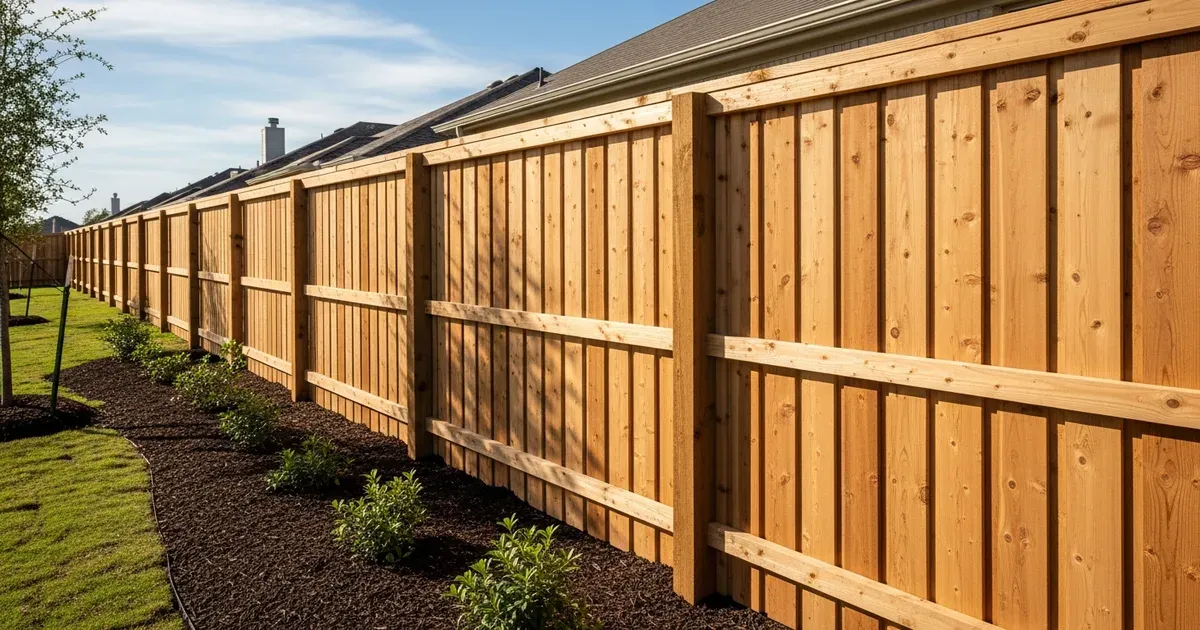
Choosing a new fence for your home in Denton is a big decision, and it’s one that needs careful thought, especially with our unique North Texas climate. We all know how unpredictable the weather can be around here – from scorching 100-degree summers to sudden freezes, and don’t forget those intense hail storms and strong winds. Your fence isn’t just a boundary; it’s an investment in your home’s privacy, security, and curb appeal. To make sure that investment lasts, you need to pick a material that can stand up to everything Denton County throws at it.
This guide will walk you through the most common fence materials, discussing their pros and cons specifically for our local conditions. We’ll look at costs, maintenance, and how different options handle the heat, humidity, and occasional wild weather we experience right here in places like Robson Ranch, Rayzor Ranch, or even the historic neighborhoods closer to downtown.
Understanding North Texas Weather’s Impact on Fences
Our climate is beautiful but tough on outdoor structures. When you’re thinking about a new fence, it’s crucial to consider these specific challenges:
- Extreme Heat: Summers in Denton regularly hit triple digits. This intense heat can cause wood to dry out, crack, and warp. It can also fade colors on some materials and even weaken plastics over time if they aren’t UV-stabilized.
- Sudden Freezes and Thaw Cycles: We often swing from warm to freezing temperatures quickly. This rapid change, especially with moisture present, can lead to materials expanding and contracting. This stress can damage fence posts, panels, and foundations.
- Hail Storms: Denton County is no stranger to hail. Large hailstones can dent metal, chip paint, and even splinter wood fences, causing significant cosmetic and structural damage. Many homeowners find themselves needing fence repairs right alongside roof repairs after a major storm.
- Strong Winds: Our open plains can mean powerful winds, especially during spring thunderstorms. These winds test the strength of fence panels and posts, making sturdy installation incredibly important.
- Expansive Clay Soil: Much of Denton sits on clay soil. This type of soil expands when wet and shrinks when dry. This movement, known as soil heave, can put immense pressure on fence posts, causing them to shift, lean, or even lift out of the ground if not properly installed with deep, wide concrete footings.
Choosing the right fence material means finding one that can endure these conditions year after year without needing constant repairs or replacement.
Key Factors to Consider When Choosing a Fence
Before diving into specific materials, let’s look at the main things you should think about. These factors will help you narrow down your choices and find the perfect fence for your Denton home.
- Durability and Lifespan: How long do you expect your fence to last? Some materials, like certain metals, can last for decades with minimal care, while others might need more frequent attention or replacement.
- Maintenance Requirements: Are you willing to stain and seal a wood fence every few years, or do you prefer a “set it and forget it” option? Your lifestyle and available time for upkeep will play a big role in this decision.
- Aesthetics and Curb Appeal: What look are you going for? Do you want a classic rustic feel, modern privacy, or an elegant decorative touch? Your fence should complement your home and landscaping.
- Privacy and Security Needs: Do you need a solid barrier for complete privacy, or is an open design that defines boundaries sufficient? Consider pets and children when thinking about security.
- Initial Cost vs. Long-Term Value: While some materials have a higher upfront cost, their longevity and low maintenance can make them more economical in the long run. It’s important to look beyond just the sticker price.
- Local HOA Rules and City Codes: Many Denton neighborhoods, especially planned communities like Lantana, Savannah, or even parts of North Lakes, have Homeowners Association (HOA) rules regarding fence materials, heights, and styles. Always check with your HOA before planning any fence project. The City of Denton also has specific zoning ordinances and requires permits for new fence installations or significant repairs. You’ll want to check with Denton Development Services to understand setbacks and height limits.
Popular Fence Materials for North Texas Weather
Let’s explore the most common fence materials and how they hold up against our local climate challenges.
Wood Fences: Classic Charm with Specific Needs
Wood fences are a timeless choice, offering natural beauty and excellent privacy. The most popular options in Denton are cedar and treated pine.
-
Cedar: This is often considered the premium wood option for North Texas. Cedar naturally resists rot, decay, and insect infestation, which is a big plus against our local pests and humidity. It also holds up better to warping and cracking from our extreme heat than some other woods. Cedar has a beautiful, natural look that can be stained or left to weather to a soft gray.
- Pros for Denton: Good natural resistance to pests and rot, handles heat better than pine, attractive.
- Cons for Denton: Still requires regular sealing or staining (every 2-3 years) to prevent weathering, fading, and moisture damage. Can still warp or crack over many years in direct sun. Hail can cause dents and splinters.
- Cost: Expect to pay $30-$45 per linear foot installed for good quality cedar in Denton County, depending on height and style.
-
Treated Pine: Pine is a more budget-friendly wood option. It’s pressure-treated with chemicals to resist rot, fungal decay, and insects. While it’s more affordable upfront, it tends to warp, crack, and twist more readily in North Texas’s intense heat and humidity compared to cedar.
- Pros for Denton: More affordable initial cost, treated to resist pests and rot.
- Cons for Denton: Prone to warping, twisting, and cracking in our extreme temperatures. Requires regular sealing to maintain appearance and protection. Less durable than cedar in the long run.
- Cost: Treated pine fences typically range from $20-$35 per linear foot installed in our area.
Regardless of the wood type, proper installation is key. Posts should be set in deep, wide concrete footings to combat our expansive clay soil. Regular maintenance, including cleaning, staining, and sealing, is essential to extend the life of any wood fence in North Texas.
Vinyl Fences: Low Maintenance and Durable
Vinyl fences have grown in popularity for their impressive durability and minimal maintenance. Made from PVC (polyvinyl chloride), these fences are engineered to resist many of the issues that plague wood.
- Pros for Denton:
- Excellent Weather Resistance: Vinyl doesn’t rot, warp, splinter, or get eaten by insects. It’s unaffected by moisture and stands up well to our heat and cold cycles. High-quality vinyl is UV-stabilized to resist fading.
- Low Maintenance: No painting, staining, or sealing ever needed. A simple wash with soap and water is usually enough to keep it looking new.
- Durability: Very strong and flexible, making it resistant to impacts, including minor hail.
- Variety: Available in many styles, colors, and textures, including options that mimic wood grain.
- Lifespan: Can last 20-30 years or more.
- Cons for Denton:
- Higher Initial Cost: Generally more expensive than wood upfront.
- Appearance: Some people prefer the natural look of wood.
- Repairs: While durable, if a panel is severely damaged (e.g., by a vehicle or very large hail), it can be harder to repair just one section; often a full panel needs replacement.
- Wind: While strong, strong winds can still damage panels if not installed correctly.
- Heat: Cheaper vinyl can become brittle over time in extreme sun, but good quality vinyl is designed to withstand this.
- Cost: Vinyl fences typically cost $35-$60 per linear foot installed in Denton County.
Vinyl fences are an excellent choice for homeowners in areas like Southridge or Rayzor Ranch who want a long-lasting, low-hassle fence.
Ready for a new fence that lasts?
Denton Home Services connects you with licensed, insured contractors — free estimates, no trip fees, no pressure.
Get a Free Fencing Estimate Today →Metal Fences: Elegance, Security, and Strength
Metal fences, primarily aluminum and wrought iron, offer a blend of elegance, security, and exceptional durability. They are often chosen for their classic look and ability to provide clear views while defining property lines.
-
Aluminum Fences: These are a popular choice for their decorative appeal and low maintenance. Aluminum is naturally rust-resistant and often comes with a powder-coated finish that protects it from the elements and prevents fading.
- Pros for Denton: Rust-proof, lightweight, very low maintenance, durable powder coating resists fading and chipping, elegant appearance, good for defining boundaries without blocking views.
- Cons for Denton: Less privacy unless combined with other materials, generally not as strong as steel/wrought iron against direct impact, higher initial cost than wood.
- Cost: Aluminum fences usually range from $30-$50 per linear foot installed.
-
Wrought Iron Fences: For ultimate strength and a classic, custom aesthetic, wrought iron is hard to beat. It’s incredibly durable and provides excellent security. However, true wrought iron is very expensive and rare; most modern “wrought iron” fences are actually made from steel.
- Pros for Denton: Extremely strong and secure, highly durable, elegant and customizable designs, excellent against wind and impacts.
- Cons for Denton: Highest initial cost, requires regular painting or powder coating to prevent rust (especially important with our humidity and occasional rain), can be very heavy and require specialized installation, offers no privacy.
- Cost: Steel or “wrought iron” fences can cost $50-$80+ per linear foot installed, with custom designs driving the price higher.
Metal fences are great for properties where aesthetics and security are paramount, such as around pools or to highlight landscaping. Their resilience to North Texas weather is generally very high, especially with proper finishes.
Chain Link Fences: Practical and Economical
Chain link fences are known for their practicality, affordability, and ease of installation. While not the most aesthetically pleasing, they serve a valuable purpose for security and containment.
- Pros for Denton:
- Economical: Lowest upfront cost of all fence types.
- Durable: Galvanized steel is rust-resistant and can withstand strong winds and minor impacts. Vinyl-coated options offer even more protection and a slightly better look.
- Low Maintenance: Requires very little upkeep beyond occasional cleaning.
- Quick Installation: Generally faster to install than other fence types.
- Good for Pets: Excellent for containing pets without blocking views.
- Cons for Denton:
- Appearance: Lacks the aesthetic appeal of wood, vinyl, or ornamental metal.
- Privacy: Offers no privacy unless privacy slats are added, which can increase cost and catch more wind.
- Heat: Metal can get very hot in direct sun.
- Cost: **Chain link fences typically range from $15-$3