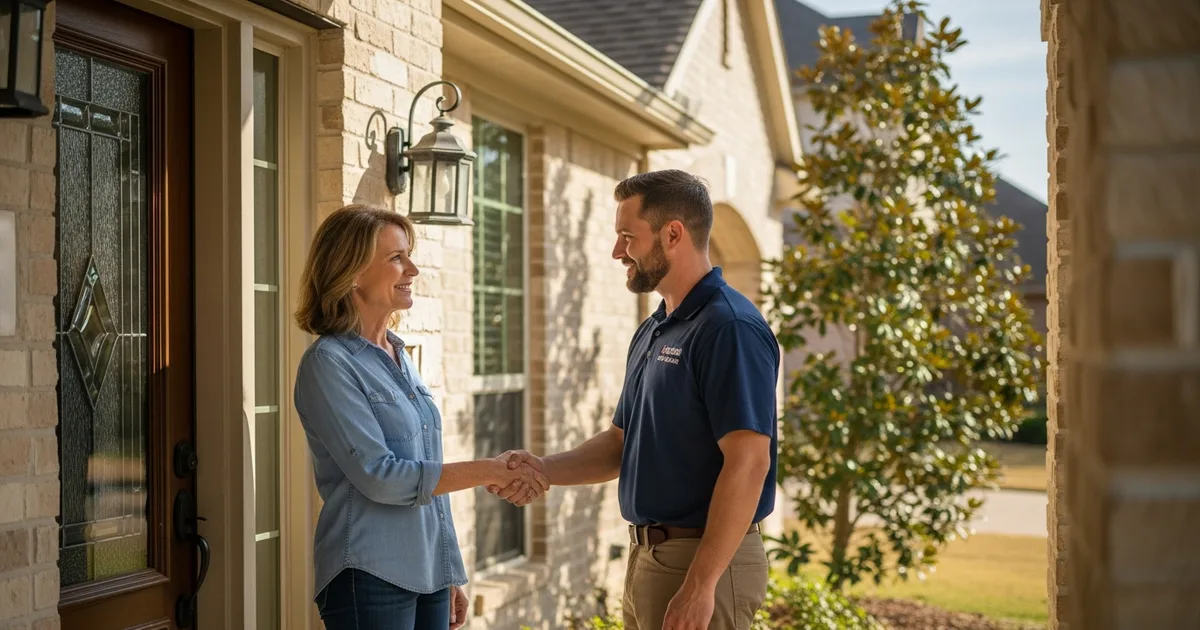
Hiring a contractor in Denton shouldn’t feel like a gamble, but for a lot of homeowners it does. The DFW metro’s construction boom means there’s no shortage of people calling themselves contractors — but the range in quality, reliability, and honesty is enormous.
Here’s how to separate the pros from the problems before you hand anyone a deposit check.
Step 1: Check Licenses and Credentials
Texas doesn’t require a general contractor license, which means anyone with a truck and a business card can call themselves a contractor. That makes your own due diligence critical.
What to verify:
- Trade licenses — Plumbers, electricians, and HVAC techs must hold state licenses. Verify through the Texas Department of Licensing and Regulation (TDLR) at tdlr.texas.gov
- City of Denton permits — For any structural, electrical, plumbing, or mechanical work, the City of Denton requires a permit. Ask your contractor if they’ll pull the permit (they should).
- Business registration — Check the Texas Secretary of State for active business filings
- BBB and Google reviews — Look at the pattern, not just the star rating. One bad review among 50 good ones is normal. Five bad reviews describing the same problem is a pattern.
Step 2: Verify Insurance
This is non-negotiable. If an uninsured worker gets hurt on your property, you could be liable.
| Insurance Type | What It Covers | Minimum to Look For |
|---|---|---|
| General liability | Property damage, accidents | $500,000 |
| Workers’ compensation | Injuries to workers on your property | Required by Texas law for most employers |
| Auto insurance | Damage from work vehicles | Standard commercial policy |
Ask for a Certificate of Insurance (COI) and call the insurance company directly to verify it’s active. Any legitimate contractor will have this ready.
Step 3: Get Multiple Written Estimates
For any job over $500, get at least three written estimates. A proper estimate should include:
- Detailed scope of work (not just “remodel bathroom”)
- Materials specified by brand and grade
- Labor costs broken out separately
- Timeline with start and completion dates
- Payment schedule tied to milestones
- Warranty terms on labor and materials
Red flag: A contractor who gives you a verbal estimate or a one-line quote on a napkin. If they can’t be specific on paper, they won’t be specific with your money.
Step 4: Watch for Red Flags
Years of matching Denton homeowners with contractors has taught us what to watch for:
- Demands full payment upfront — Standard is 10–30% deposit, with progress payments tied to milestones. Never pay more than 50% before work is substantially complete.
- No physical address — A PO Box or “we’ll come to you” setup makes it harder to find them if something goes wrong
- Pressure to skip permits — “We don’t need a permit for this” is sometimes true, often not. If in doubt, call the City of Denton Development Services at (940) 349-8500.
- Unusually low bid — If one bid is 40% below the others, they’re cutting corners on materials, labor, or insurance
- Can’t provide references — Every established contractor has at least 3 recent local references. Ask for them and actually call.
Pre-Vetted Contractors, No Guesswork
Every contractor in the Denton Home Services network is licensed, insured, and reviewed by real Denton homeowners. We've done the vetting so you don't have to.
See Our Contractor Network →Step 5: Get a Written Contract
Before any work starts, you should have a signed contract that covers:
- Complete scope of work with specifications
- Total cost and payment schedule
- Start date and estimated completion date
- Change order process (how changes are priced and approved)
- Cleanup and disposal responsibilities
- Warranty terms — 1 year on labor is standard in Denton
Denton-Specific Tips
- Storm chaser season — After hail storms, out-of-state “roofers” flood Denton neighborhoods. They collect insurance checks, do shoddy work, and vanish. Stick with established local companies.
- HOA approval — If you’re in Robson Ranch, Lantana, Savannah, or any HOA community, get architectural approval before your contractor starts. Some HOAs fine homeowners for unapproved exterior work.
- City inspections — The City of Denton inspects permitted work at specific stages. Your contractor should coordinate these. If they tell you inspections aren’t needed, that’s a major red flag.
- Summer scheduling — Denton’s construction season peaks May through September. Book early or expect 3–6 week lead times for popular trades.
Bottom Line
The 30 minutes you spend vetting a contractor can save you thousands in bad work, disputes, and do-overs. Check licenses, verify insurance, get written estimates, and never pay the full amount upfront. If something feels off, trust your gut and move on — there are plenty of good contractors in Denton.