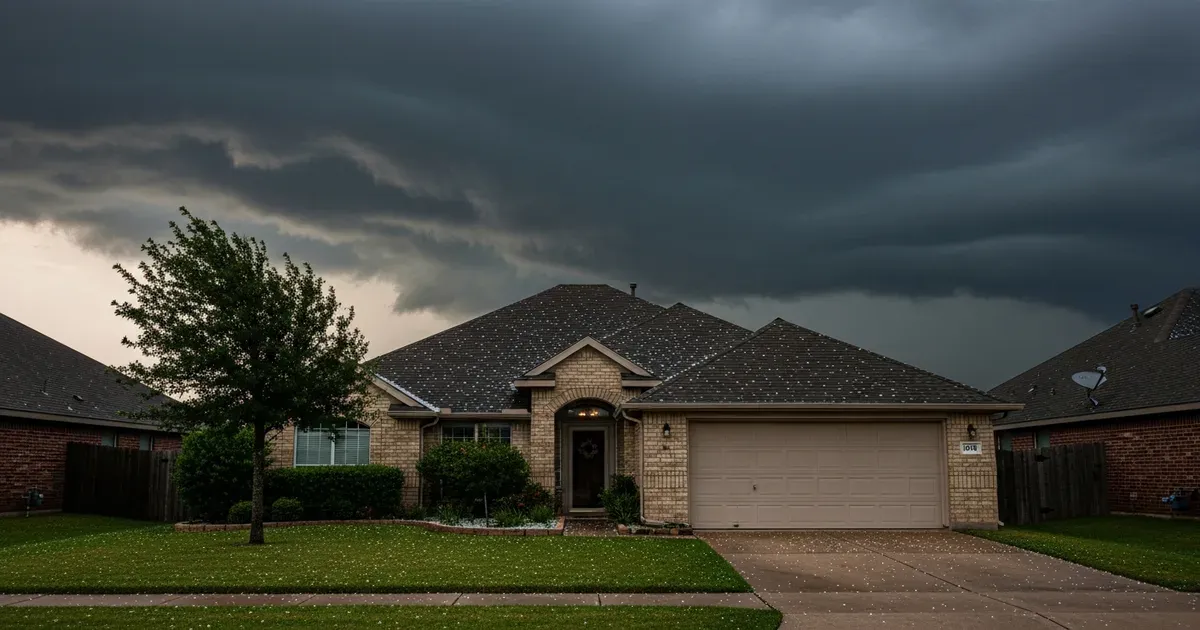
Denton, Texas homeowners know our weather can be a wild ride. From scorching 100-degree summers to sudden, violent hail storms and strong winds, your roof takes a beating year-round. But as we head into another storm season, it’s more important than ever to make sure your home’s first line of defense is ready. A little proactive maintenance now can save you a lot of headache and expense later.
Why Your Denton Roof Needs Extra Attention
Living in Denton County, whether you’re in a historic home near UNT, a newer build in Rayzor Ranch, or out in Robson Ranch, your roof faces unique challenges. Our intense climate isn’t just about the heat; it’s about rapid temperature swings, relentless UV exposure, and the infamous North Texas hail storms that can roll through with little warning. The stretch from March through June is peak severe weather season, and Denton sits right in the middle of the corridor where warm Gulf moisture collides with dry air from the west, creating the perfect conditions for supercell thunderstorms, large hail, and damaging straight-line winds.
According to insurance data, Denton County regularly ranks among the top counties in Texas for hail damage claims. We’ve all seen the aftermath: roofing crews swarming neighborhoods, tarps covering damaged sections, and door-to-door solicitors appearing before the storm debris is even cleared. The homeowners who fare best are the ones who were prepared before the storm hit.
Your Pre-Storm Roof Checklist
Use this checklist in late winter or early spring, ideally in February or March, to make sure your roof is ready for whatever North Texas throws at it.
1. Visual Inspection From the Ground
You don’t need to climb on your roof to catch most warning signs. Grab a pair of binoculars and walk the perimeter of your home, looking for:
- Missing, cracked, or curling shingles. These are vulnerable points where wind can get underneath and peel shingles away during a storm.
- Granule loss. If your shingles look bare, shiny, or patchy compared to the rest of the roof, they’ve lost their protective granule coating. Check your gutters and downspout discharge areas for piles of granules, which look like coarse dark sand.
- Sagging areas. Any visible dip or sag in the roofline can indicate structural issues, water damage, or failed decking underneath.
- Damaged flashing. Look at the metal pieces around chimneys, vents, skylights, and where the roof meets a wall. Bent, rusted, or separated flashing is a common entry point for water.
- Algae or moss growth. Dark streaks or green patches indicate moisture retention, which can deteriorate shingles over time. This is more common on north-facing roof planes that get less direct sun.
2. Clean and Inspect Your Gutters
Clogged gutters are one of the most common causes of water damage during heavy Denton rainstorms. When gutters can’t drain properly, water backs up under the roof edge, seeps into the fascia board, and can eventually cause rot and interior water damage.
Clean out all leaves, twigs, and debris from gutters and downspouts. While you’re at it, check that gutters are securely fastened and haven’t pulled away from the fascia. Years of Denton’s clay soil expanding and contracting can cause subtle foundation shifts that pull gutters out of alignment.
Make sure downspouts extend at least 3-4 feet away from the foundation. Denton’s clay soil is notorious for absorbing water and expanding, which puts pressure on foundations. Proper drainage keeps water moving away from the house, protecting both your roof system and your foundation.
Consider installing gutter guards if you haven’t already. They cost $200-$400 for a typical Denton home and dramatically reduce how often you need to clean gutters, especially if you have mature oak or pecan trees near the house.
3. Trim Trees and Remove Overhanging Branches
Overhanging branches are a double threat during storms. Wind can snap them onto your roof, causing direct impact damage, and even in calm weather, branches that rub against shingles gradually wear away the protective surface. In Denton, mature post oaks and pecan trees are common, and their limbs can extend surprisingly far over rooflines.
Trim any branches that hang within 6 feet of your roof. For small branches, this is a manageable DIY job with a pole saw. For larger limbs or anything near power lines, hire a professional tree service. In Denton, tree trimming typically costs $150-$500 depending on the size and number of branches, and it’s a worthwhile investment given the potential cost of storm damage.
Also inspect for any dead trees or dead limbs in your yard that could become projectiles during high winds. A dead tree that falls onto your roof during a storm can cause $10,000-$30,000 in damage easily.
4. Check Your Attic From the Inside
Your attic tells you a lot about your roof’s condition that you can’t see from outside. On a sunny day, go into the attic and look for:
- Daylight showing through the roof deck. Any points of light mean there are gaps where water will enter during rain.
- Water stains or discoloration on the underside of the decking. Brown or dark spots indicate past or current leaks.
- Damp or soft wood. Press against the decking and rafters. Soft, spongy wood means moisture damage that needs repair before a storm makes it worse.
- Adequate ventilation. Your attic should have proper intake vents (usually in the soffits) and exhaust vents (ridge vents or turbine vents on top). Poor ventilation traps heat and moisture, which degrades shingles from the inside out and can cause decking to warp. In Denton’s extreme summer heat, attic temperatures can exceed 150 degrees without proper ventilation.
5. Inspect and Repair Flashing and Seals
Flashing is the metal material installed at joints and transitions on your roof, around chimneys, plumbing vents, skylights, and where the roof meets vertical walls. It’s designed to direct water away from these vulnerable areas, but over time, caulk dries out, screws loosen, and metal corrodes.
A professional roofer can inspect and reseal flashing for $100-$300, depending on how many areas need attention. This is one of the most cost-effective preventive measures you can take. A failed flashing seal during a heavy Denton rainstorm can lead to thousands of dollars in water damage to ceilings, walls, and insulation.
Not Sure What Shape Your Roof Is In?
Our Denton roofing team provides free storm-readiness inspections. We'll check your shingles, flashing, ventilation, and gutters and give you an honest assessment before storm season hits.
Schedule a Free Roof Inspection →6. Review Your Insurance Policy
Before storm season is the time to review your homeowner’s insurance, not after the hail is on the ground. Pull out your policy and confirm:
- Your coverage amount reflects current replacement costs. Roofing materials and labor have increased significantly in recent years. A full roof replacement in Denton currently runs $8,000-$15,000 for a typical home with architectural shingles, depending on size and complexity. Make sure your coverage keeps pace.
- Your deductible. Many Texas homeowner policies have separate wind/hail deductibles, often calculated as a percentage of your home’s insured value (commonly 1-2%). On a $350,000 home, that’s $3,500-$7,000 out of pocket. Know this number before the storm, not after.
- Your filing deadline. Texas insurance policies typically require you to file a claim within one year of the damage, but sooner is always better. Document your roof’s current condition with dated photos now, so you have a clear “before” baseline if a claim becomes necessary.
7. Know Your Roof’s Age and Material
The age of your roof directly affects how well it will handle storm damage. Most standard architectural shingle roofs in Denton have a rated lifespan of 25-30 years, but North Texas weather often shortens that to 15-20 years of real-world performance. If your roof is approaching 15 years old, it’s more vulnerable to hail and wind damage, and you should be especially diligent about inspections.
If you’re not sure when your roof was last replaced, check your home’s closing documents, previous inspection reports, or ask a roofer to estimate the age based on the shingle condition. Knowing your roof’s age helps you make informed decisions about whether to repair or replace after storm damage.
What to Do After a Storm Hits
Even with the best preparation, Denton storms can cause damage. Here’s how to handle the aftermath effectively.
Assess Safely
Never climb on a wet or damaged roof. After a storm passes, do a ground-level visual inspection. Look for obvious damage: missing shingles, dented gutters, fallen branches, or debris on the roof. Check inside for any signs of active leaks, especially around ceiling fixtures, attic access points, and along exterior walls.
Document Everything
If you see damage, photograph it thoroughly before any cleanup or temporary repairs. Take wide shots showing the whole roof, medium shots of damaged areas, and close-ups of individual damage points. Note the date and time. This documentation is critical for your insurance claim.
Make Temporary Repairs
If you have an active leak, place buckets to catch water and minimize interior damage. If shingles are missing, a tarp secured with boards can prevent further water intrusion until a professional can make permanent repairs. Most Denton hardware stores stock blue tarps and roofing cement for exactly this purpose.
Be Cautious With Storm Chasers
After every major hail event in Denton, out-of-town roofing companies flood the area, going door to door offering inspections and repairs. While some are legitimate, many are not. They collect insurance payouts, do subpar work with cheap materials, and are gone before you notice the problems.
Stick with established Denton-area roofers who have a local reputation to protect. Ask for proof of insurance, a physical local address, and references from Denton homeowners. Avoid anyone who asks you to sign a contract on the spot or pressures you with limited-time offers.
File Your Claim Promptly
Contact your insurance company as soon as possible after documenting the damage. Your insurer will send an adjuster to assess the damage. Having a professional roofer present during the adjuster’s visit can be helpful, as they can point out damage that might otherwise be overlooked. Many Denton roofers offer this service at no extra charge.
Long-Term Roof Protection Strategies
If you’re planning a roof replacement in the next few years, or if storm damage forces the issue, consider these upgrades that offer better long-term protection for Denton homes.
Impact-resistant shingles (Class 4 rated) are designed to withstand hail up to 2 inches in diameter. They cost 10-20% more than standard architectural shingles but offer significant advantages. Many Texas insurance companies offer premium discounts of 10-28% for Class 4 roofs, which can offset the additional cost over time.
Proper attic ventilation extends the life of any roofing material by preventing heat buildup that bakes shingles from underneath. A balanced system with adequate soffit intake and ridge exhaust keeps attic temperatures manageable even during the worst of Denton’s summer heat.
Upgraded underlayment provides a secondary water barrier between the shingles and the roof deck. Synthetic underlayment performs better than traditional felt in North Texas heat and provides added protection if shingles are damaged during a storm.
Storm Season Is Coming. Is Your Roof Ready?
Don't wait until after the damage is done. Our Denton roofing professionals can inspect your roof, handle repairs, and help you navigate insurance claims if needed.
Get Your Roof Storm-Ready →The Quick-Reference Checklist
Print this out, stick it on the fridge, and work through it before April:
- Walk the perimeter and inspect shingles, flashing, and vents from the ground
- Clean gutters and check downspout extensions
- Trim branches within 6 feet of the roofline
- Inspect the attic for leaks, daylight, and ventilation issues
- Check and reseal any cracked or deteriorated flashing
- Review your insurance policy, deductible, and filing requirements
- Document your roof’s current condition with dated photos
- Know your roof’s age and material type
- Identify a trusted local Denton roofer before you need one in an emergency
Taking an afternoon to work through this list can be the difference between a minor inconvenience and a major financial setback when the next Denton storm rolls through. Your roof protects everything underneath it. Make sure it’s ready.