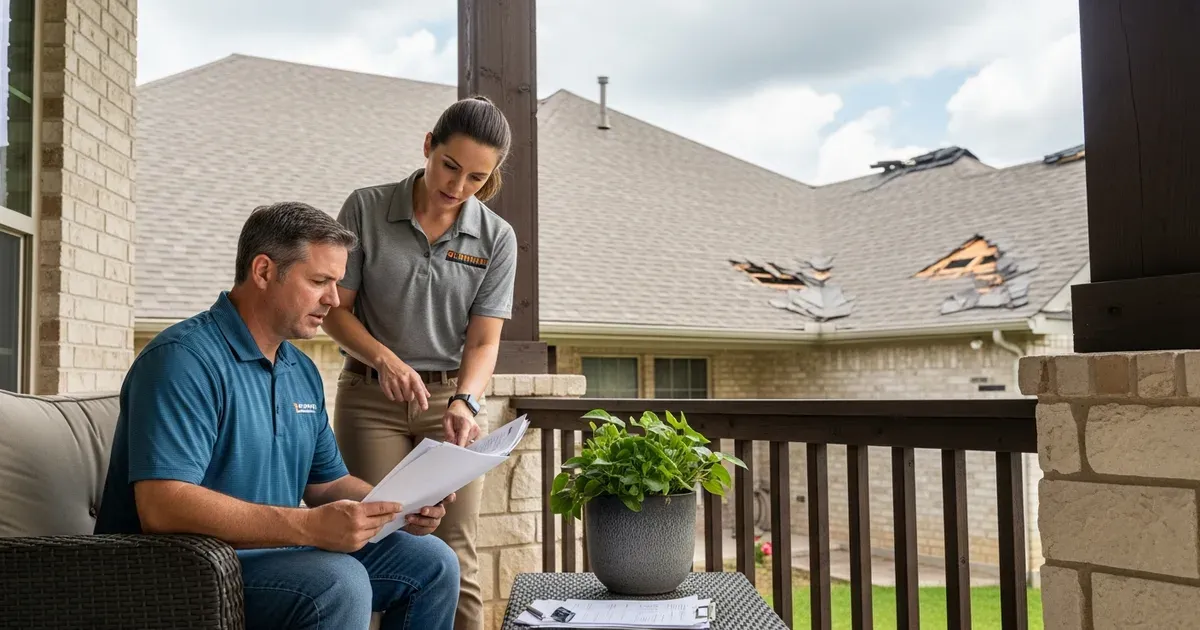
When a severe storm rolls through Denton County, leaving behind a trail of hail, high winds, and heavy rain, your roof often takes the brunt of it. From the historic homes in the downtown area to the newer builds in neighborhoods like Robson Ranch, Argyle, or Rayzor Ranch, no roof is truly immune to North Texas weather. Dealing with roof damage can be stressful enough, but navigating the insurance claim process can feel like another storm entirely.
This guide is designed to help Denton County homeowners understand how to file a roof insurance claim, from the moment the storm passes to the final nail being hammered. We’ll walk you through the steps, offer Denton-specific advice, and help you get your roof restored without unnecessary headaches.
Understanding Denton County’s Roof Risks
Denton County sits squarely in “Hail Alley,” a region prone to frequent and sometimes severe hailstorms. These storms, often accompanied by strong winds, are a common cause of roof damage here. Even without large hailstones, high winds can lift and tear shingles, especially on older roofs.
Our scorching 100+ degree summers also play a role. The intense heat and UV exposure can accelerate the aging of roofing materials, making them more brittle and susceptible to damage from subsequent storms. When hail or wind hits an already weakened roof, the damage can be extensive.
First Steps After a Storm: Safety and Documentation
After a storm, your first priority is safety. Do not climb onto a wet or damaged roof yourself. If there are downed power lines (even if they look dead, assume they’re live), stay far away and call Oncor immediately.
Once it’s safe, do a preliminary inspection from the ground. Use binoculars to look for obvious signs of damage like missing shingles, dented gutters, or debris on your lawn. Take photos and videos of anything suspicious, including any interior leaks. This initial documentation will be crucial for your claim.
If you have an active leak, try to contain the water with buckets and towels. For more serious damage that exposes your home to further water intrusion, a temporary tarp might be necessary. You can often hire a local roofing contractor for emergency tarping, which typically costs $200 to $600 in Denton County, and this cost is usually covered by your insurance.
Assessing the Damage: What to Look For
While you shouldn’t get on the roof, a careful ground-level inspection can reveal a lot. Here’s what to look for:
- Missing or Torn Shingles: High winds can easily rip shingles right off your roof, leaving exposed areas.
- Hail Dents: Look for small, circular indentations on shingles, gutters, vents, and even outdoor air conditioning units. Hail damage to shingles often removes the protective granules, exposing the asphalt layer underneath.
- Cracked or Bruised Shingles: Hail can cause cracks that are hard to see from the ground but compromise the shingle’s integrity.
- Granule Loss: If you see a lot of shingle granules in your gutters or on the ground around your home, it’s a strong sign of hail damage.
- Damaged Flashing: The metal strips around chimneys, skylights, and vents can be bent or torn by hail and wind, leading to leaks.
- Dented Gutters and Downspouts: This is a clear indicator that hail hit your home with enough force to damage the roof.
Remember, some damage, especially to the shingles themselves, can be subtle and difficult for an untrained eye to spot. This is why involving a professional is so important.
Contacting a Local Roofing Contractor First (Recommended)
Many Denton homeowners make the mistake of calling their insurance company immediately after a storm. While this seems logical, it’s often more beneficial to contact a reputable local roofing contractor first. Here’s why:
- Expert Assessment: A professional roofer knows exactly what to look for and can provide a thorough, unbiased assessment of the damage. They can often spot subtle damage that an insurance adjuster might miss, especially if they’re not local.
- Documentation: Your contractor can take detailed photos and notes that support your claim.
- Advocacy: A good contractor will meet with your insurance adjuster to point out all damage and ensure a fair assessment. They speak the same language as the adjuster and can advocate for the full scope of repairs needed.
- Cost Estimates: They can provide an initial estimate for repairs or replacement, giving you an idea of the project’s scope before the adjuster’s visit.
Look for contractors who are licensed, insured, and have a strong local reputation in Denton. Avoid “storm chasers” who appear after a major weather event and disappear just as quickly.
Need a Trusted Denton Roofer for Your Storm Damage Claim?
Denton Home Services connects you with licensed, insured contractors — free estimates, no trip fees, no pressure.
Find a Denton Storm Damage Roofing Contractor →Understanding Your Homeowner’s Insurance Policy
Before you file a claim, it’s wise to review your homeowner’s insurance policy. Pay close attention to these key terms:
- Deductible: This is the amount you’re responsible for paying out-of-pocket before your insurance coverage kicks in. For roof damage claims in Denton, many policies have a separate wind/hail deductible, which is often 1% or 2% of your home’s dwelling coverage. For a home insured for $350,000, a 1% deductible would be $3,500.
- Actual Cash Value (ACV) vs. Replacement Cost Value (RCV):
- ACV policies pay for the depreciated value of your roof, meaning they subtract for age and wear-and-tear. This leaves you responsible for a significant portion of the replacement cost.
- RCV policies pay for the cost to replace your roof with new materials of similar quality, without deducting for depreciation. This is generally the preferred coverage for homeowners. Most policies pay an initial ACV, and then the recoverable depreciation once the work is completed and proof of payment is submitted.
- Exclusions: Understand what your policy does not cover. Standard policies typically cover sudden, accidental damage from events like storms, but not damage from neglect or normal wear and tear.
If you’re unsure about your policy details, call your insurance agent. It’s better to be informed upfront.
Filing the Claim with Your Insurer
Once you’ve had a preliminary assessment by a trusted Denton roofer, and you’re confident you have legitimate storm damage, it’s time to contact your insurance company. Here’s how:
- Gather Information: Have your policy number, the date of the storm, and details of the damage readily available.
- Contact Your Insurer: You can usually file a claim online, through their app, or by calling their claims department directly.
- Provide Details: Clearly describe the damage you’ve observed and mention any temporary repairs you’ve made (like tarping).
- Request an Adjuster: Your insurer will assign a claims adjuster who will schedule a visit to inspect your roof.
Be honest and thorough in your description, but avoid speculating or exaggerating the damage. Stick to the facts.
The Insurance Adjuster’s Inspection
The insurance adjuster’s visit is a critical step. They will come to your Denton home to assess the damage firsthand. Here’s what to expect and how to prepare:
- Be Present: Try to be home during the inspection. This allows you to point out any areas of concern and ask questions.
- Have Your Contractor Present: This is highly recommended. Your local roofer can walk the roof with the adjuster, ensuring all damage is noted and discussed. They can also explain technical aspects of roof construction and damage that might be missed by an adjuster who isn’t a roofing expert.
- Provide Documentation: Share your photos, videos, and any notes you took during your initial assessment.
- Review Findings: After their inspection, the adjuster should discuss their findings with you. Don’t be afraid to ask for clarification on anything you don’t understand.
The adjuster will typically create a detailed report, often using software like Xactimate, which calculates repair or replacement costs based on local market rates.
Typical Roof Insurance Claim Timeline in Denton County
Understanding the general timeline can help manage your expectations during the claim process. Keep in mind that severe, widespread storm events can cause delays due to a high volume of claims.
| Step | Estimated Timeframe (Post-Storm) | Notes |
|---|---|---|
| Initial Damage Assessment | Immediately - 3 days | Homeowner’s visual inspection, call a local roofer for expert assessment and temporary repairs if needed. |
| Filing the Claim | 1 - 7 days | Contact your insurance company. Provide details and schedule adjuster visit. |
| Adjuster Inspection | 5 - 14 days | Adjuster visits your home. Have your roofer present. This can be longer after major storms. |
| Receive Adjuster Report/Offer | 7 - 21 days | Insurance company sends their assessment and initial payment (often ACV). Review carefully with your contractor. |
| Contractor Agreement & Permits | 7 - 14 days | Sign contract with your chosen Denton roofer. They will pull necessary permits (e.g., from the City of Denton, Town of Argyle, etc.). |
| Roof Repair/Replacement | 2 - 10 days (actual work) | Actual construction time. Can vary based on roof size, complexity, materials, and weather. |
| Final Payment/Depreciation |