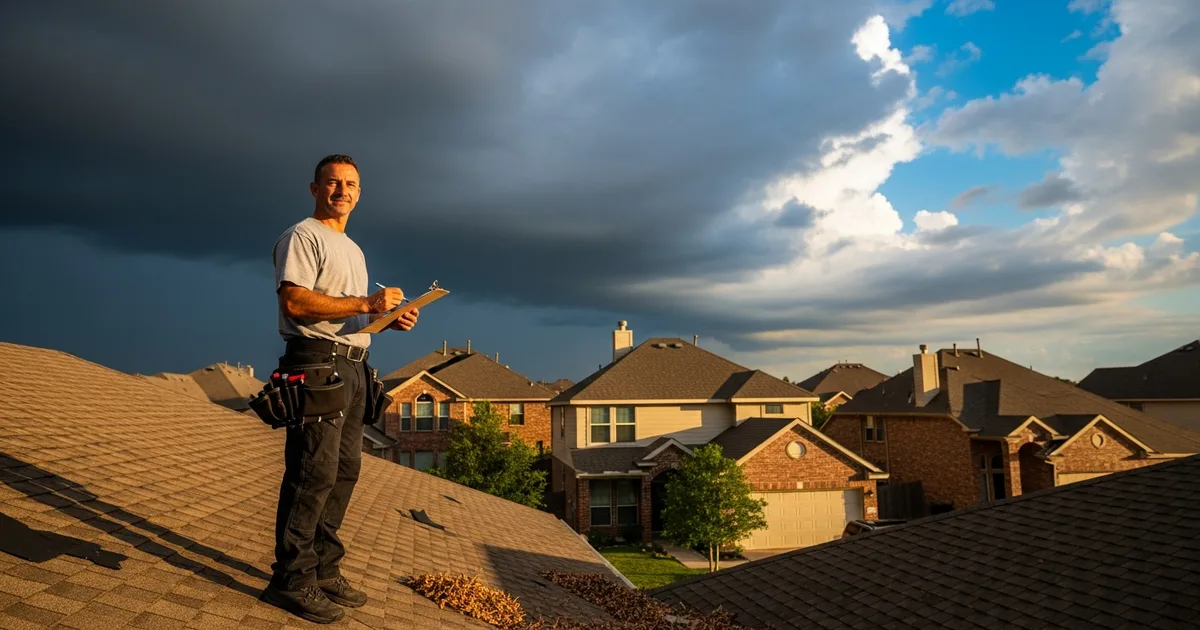
Denton County sits in the heart of North Texas hail alley. Between March and June, severe storms roll through with wind gusts over 60 mph and hail that can range from pea-sized to golf ball-sized — sometimes larger. Every spring, these storms cause millions in roof damage across Denton, Flower Mound, Lewisville, and the surrounding area.
Knowing what to look for after a storm can save you thousands by catching damage before it leads to leaks, mold, or a failed insurance claim.
Safety First
Do not climb onto your roof during or immediately after a storm. Wet shingles are dangerously slick, and structural damage may not be visible. Start your inspection from the ground and the interior of your home.
Interior Inspection Checklist
Walk through every room in your home and check:
- Ceilings — Look for new water stains, discoloration, bubbling paint, or sagging drywall. Check corners where walls meet the ceiling.
- Attic — If you have attic access, look for daylight coming through the roof deck, wet insulation, or water trails on rafters. Bring a flashlight.
- Around vents and skylights — These penetrations are the most common leak points. Check the ceiling and walls within 3 feet of any roof penetration.
- Window frames — Wind-driven rain can push water in around improperly flashed windows. Check for moisture on sills and frames.
Exterior Ground-Level Checklist
Walk the perimeter of your home and look for:
| What to Check | What to Look For |
|---|---|
| Shingles on the ground | Missing shingles blown off by wind |
| Gutters and downspouts | Dents from hail, granule buildup in gutters (looks like coarse black sand) |
| Siding and trim | Hail dents, cracks, or holes in vinyl or fiber cement siding |
| Window screens | Pockmarks or holes from hail impact (a reliable indicator of hail size) |
| Fence and deck | Dents or dings on horizontal surfaces (confirms hail hit your property) |
| AC unit | Dented fins on the exterior condenser (another reliable hail indicator) |
| Soft metals | Check mailbox, garage door, and any aluminum surfaces for dent patterns |
Soft metal damage is the easiest way to confirm hail impact and estimate hail size — useful evidence for your insurance claim.
Roof-Level Damage Signs
If you can safely view your roof from a ladder at the gutter line (do not walk on the roof), or if you use binoculars from the ground:
- Hail damage on shingles — Looks like dark spots or bruises where the granules have been knocked off, exposing the black asphalt mat underneath. These are often random in pattern, not in lines.
- Wind damage — Shingles that are lifted, curled, or creased along the edges. Missing shingles leave dark rectangular patches.
- Ridge cap damage — The shingles along the peak of the roof take the most hail impact. Check these first.
- Flashing — Metal flashing around chimneys, vents, and valleys may be dented, displaced, or lifted by wind.
- Vent boots — The rubber gaskets around pipe vents crack and split from hail impact, creating leak points that may not show up for months.
Documenting the Damage
Before you call your insurance company or a roofer:
- Take photos of everything — date-stamped photos of all visible damage from the ground, including soft metal damage, gutter granules, and fallen shingles
- Note the storm date and time — your insurer will tie the claim to a specific weather event
- Save any hailstones — photograph them next to a ruler or coin for scale (put them in the freezer if possible)
- Check the National Weather Service storm reports — they log confirmed hail size and location by zip code, which supports your claim
Insurance Claim Tips for Denton Homeowners
- File promptly. Texas law gives you one year, but the sooner you file, the stronger your claim.
- Get an independent inspection before the adjuster arrives. You want to know the full scope of damage on your own terms.
- Understand your deductible. Most Denton-area policies have a 1–2% wind/hail deductible based on your home’s insured value, not a flat dollar amount. On a $350,000 home, a 2% deductible is $7,000.
- Do not sign a contract with a roofer who demands full payment upfront or pressures you to sign before the insurance process is complete.
Need a Post-Storm Roof Inspection?
Get a free, no-obligation roof inspection from a licensed Denton roofer. We document damage and help you navigate the insurance process.
Schedule a Roof Inspection →North Texas storms are not going to stop. A 30-minute inspection after each significant storm is the cheapest insurance you have against roof damage turning into water damage, mold, or a denied claim.