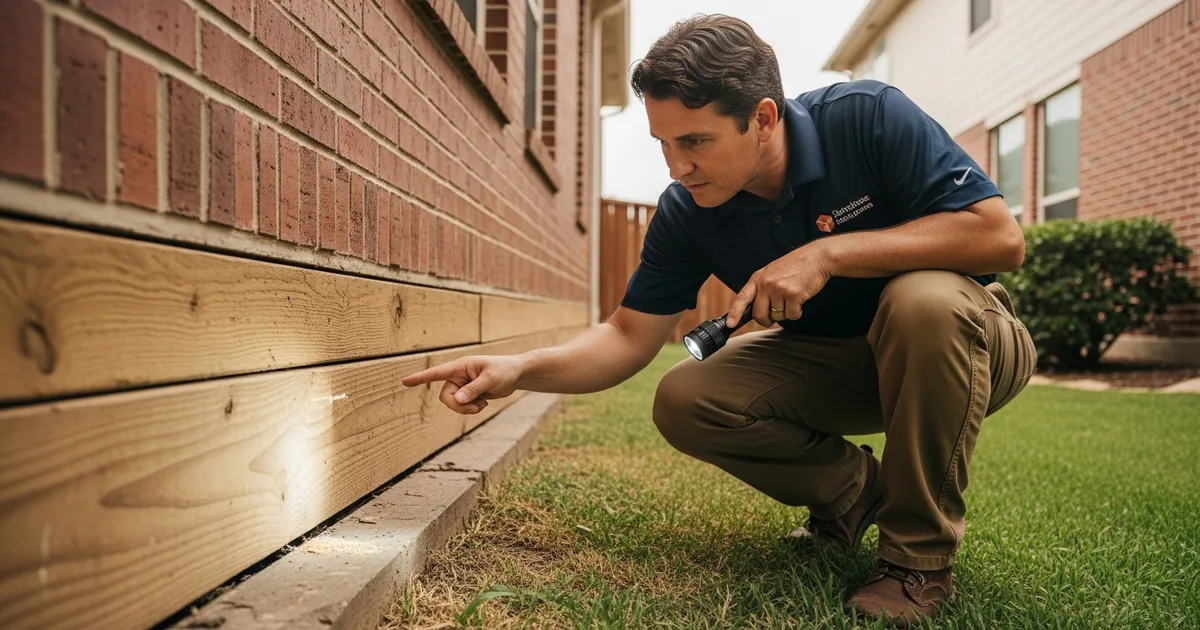
North Texas is one of the highest-risk areas in the country for subterranean termites. The warm climate, clay soil that retains moisture, and abundance of slab-on-grade construction create ideal conditions for colonies that can go undetected for years.
If you own a home in Denton, Corinth, Lake Dallas, Highland Village, or anywhere in Denton County, termite prevention is not optional — it is basic home maintenance.
Why North Texas Homes Are Vulnerable
Subterranean termites need three things: moisture, cellulose (wood), and soil contact. North Texas provides all three in abundance.
Key risk factors for Denton-area homes:
- Clay soil retains moisture even during dry months, keeping termite colonies hydrated just below the surface
- Slab foundations bring wood framing within inches of the soil line, especially where the slab edge meets the exterior wall
- Expansion joints and plumbing penetrations in slabs create direct pathways from soil to wood
- Mulch beds against the foundation (extremely common in Denton neighborhoods) hold moisture right where termites want it
Homes in older Denton neighborhoods like Oak-Hickory, Pecan Creek, and areas near TWU campus are especially vulnerable because their original chemical barriers have long since degraded.
8 Prevention Steps That Actually Work
1. Maintain a 4-Inch Gap Between Soil and Wood
Check the perimeter of your home. If soil, mulch, or landscaping has built up to the point where it contacts your wood siding or framing, termites have a direct bridge. Pull mulch back at least 4 inches from the foundation.
2. Fix Moisture Problems First
Termites follow moisture. Repair leaky hose bibs, ensure your gutters drain at least 3 feet from the foundation, and fix any grading that slopes toward the house. In Denton’s clay soil, poor drainage concentrates moisture right at the slab edge.
3. Eliminate Wood-to-Ground Contact
Fence posts, deck supports, and porch columns that sit directly in soil are termite highways. Use metal post brackets or concrete footings to break the connection.
4. Store Firewood Away From the House
Keep firewood, lumber, and cardboard at least 20 feet from your foundation and elevated off the ground. This is one of the most common entry points pest inspectors see in Denton.
5. Seal Expansion Joints and Cracks
The expansion joint where your garage slab meets the foundation wall is a classic entry point. Seal it with polyurethane caulk. Do the same for any visible cracks in your foundation perimeter.
6. Install or Maintain a Chemical Barrier
Modern liquid termiticides (like Termidor or Taurus) create a treated soil zone around your foundation that kills termites on contact. A professional application lasts 5–10 years. If your home has never been treated, or it has been more than 8 years, this is the single most effective step you can take.
7. Consider a Bait Station System
Bait stations installed every 10–15 feet around your foundation intercept foraging termites before they reach your home. They require annual monitoring but provide ongoing detection and elimination.
8. Get an Annual Inspection
A licensed pest inspector can spot mud tubes, frass, and early damage that homeowners miss. Most Denton pest control companies offer free annual inspections — there is no reason to skip this.
Treatment Cost Comparison
| Treatment Type | Typical Cost (Denton) | Longevity | Best For |
|---|---|---|---|
| Liquid barrier (Termidor) | $800 – $1,500 | 5–10 years | Homes needing full perimeter protection |
| Bait stations (Sentricon/Trelona) | $1,200 – $2,000 + $300–$500/yr | Ongoing | Long-term monitoring and prevention |
| Spot treatment | $300 – $500 | 1–3 years | Localized activity, small areas |
| Borate wood treatment (new construction) | $1,000 – $2,000 | Life of the wood | Pre-construction prevention |
Know the Warning Signs
Spring is swarming season in North Texas. If you see small winged insects emerging from your walls, foundation, or window frames between March and May, those are likely termite swarmers — and they indicate a mature colony that has been feeding for 3–5 years.
Other signs: mud tubes on your foundation walls, hollow-sounding wood when tapped, and small piles of wings near windows.
Schedule a Free Termite Inspection
Catch termite activity early before it becomes structural damage. Free inspections for Denton County homeowners.
Request a Pest Control Estimate →Termite damage is not covered by standard homeowner’s insurance in Texas. Prevention and early detection are the only cost-effective strategies — and in North Texas, the question is not if termites are near your home, but whether they have found a way in yet.